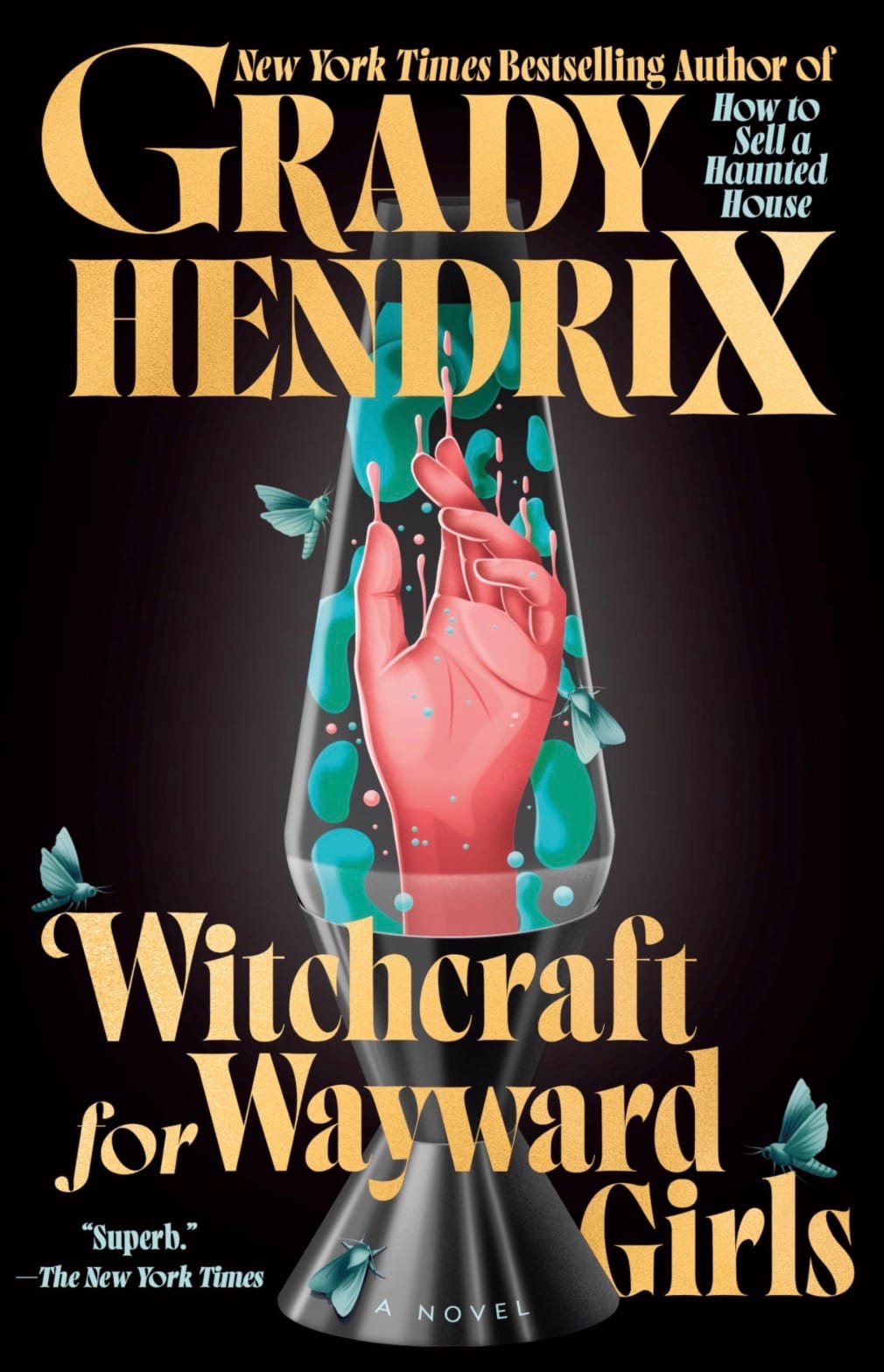
Witchcraft for Wayward Girls by Grady Hendrix
Unravel the harrowing truth of forced adoptions in mid-20th-century maternity homes and the young women who fought to reclaim their power in Witchcraft for Wayward Girls.

Between 1945 and 1971, approximately 95% of births to unmarried mothers were placed for adoption, compared to about 2% of births to single mothers today.
Let's start with a brief history lesson...
Once upon a not-so-distant time, young women who found themselves pregnant were vanished into institutions with names like ‘Our Lady of Mercy.
They called them maternity homes—but for many girls, they felt more like prisons run by faith-based organizations.
Back then, sex education was nonexistent, birth control was hard to get, and abortion wasn’t an option.
So if you found yourself pregnant, that was it—you carried the baby.
These places were supposed to be 'homes', but they weren’t safe havens by any stretch.
Sure, you got food, a bed, and a roof over your head, but kindness and mental health resources? Not so much.
The girls were pressured—constantly—to give up their babies for adoption.

Told they shamed their families, and the only way to make things right was to disappear quietly and give the baby to someone “more deserving.”
And who was more deserving?
A married, middle class white couple, with a nice house and steady jobs.
The girls were made to believe that keeping their child meant dooming them to a life of rejection—that they were bad mothers if they wanted to raise their own baby.
Imagine carrying that kind of guilt on top of everything else.
"'No one cares what you wish, my dear,' she said. 'Isn't that your problem? No one cares what any of you wish, or hope, or pray. You speak, you cry, you scream, you beg, and what good has it done you? Here you are, hidden away like unflattering photographs in some forgotten drawer, locked up for doing the most natural thing in the world.'"

The babies who came out of those homes grew up never knowing their real mothers—or the circumstances that led to their adoption.
And if a woman dared to say she wanted to keep her baby?
She was punished.
Hospitals threatened massive bills. Families disowned her. She’d be homeless, unable to feed her child, destined to fail.
What would you have chosen?
In the end, the women only had each other. But even that connection was kept at arm’s length. They were given new names, fake backstories, and strict instructions not to share personal details.
And when their babies were born, the secrecy didn’t end.
These women were expected to quietly reenter society as if nothing had happened. They were told to invent stories about where they’d been for the past few months, to smile, to move on, and above all—to never speak of it again.
And that brings me to Witchcraft for Wayward Girls.
In the Florida woods sits a place that’s supposed to “help” young women—but really, it’s more of a prison. It’s run by a headmistress who gives off serious Mrs. Trunchbull vibes.
Parents drop off their pregnant daughters, sign a few papers, and drive away—relieved to have their “problem” and shame handled.
But you realize pretty quickly that these girls are anything but fragile. They’ve each lost something—and in that loss, they’ve found a kind of freedom.
After weeks of feeling small and terrified, four girls suddenly felt something shift.
Power.

Maybe not the kind the headmistress believed in, but something deeper—something the walls of that place couldn’t contain.
They turned to witchcraft—calling on a coven and surrendering themselves to the magic that promised sweet revenge.
This wasn’t rebellion for the sake of chaos. It was survival.
When the strength of the coven stops being a question of myth or reality, things take a darker turn.
The power they’ve unleashed starts to tear down the world around them, taking back everything that was stolen from them in the name of order and morality.
But the girls’ strength? That's the real magic.
They earn the respect of the witches who came before them—and a few loyal staff trapped in the same cruel machine.
This book doesn’t shy away from the brutal truth of childbirth in the 1970s. It’s raw, it’s horrifying, and at times, it’s almost unbearable to read. But it’s also necessary. Because this is what so many women went through—giving birth in secret, without proper medical care, compassion, or dignity.
By the time you reach the end, you’re in awe of these girls. They fight, they endure, and somehow—they still find sisterhood and strength in each other.
You feel proud. Fierce. Inspired.

"They said she could go back to her old life. They said it wouldn't hurt. They said she'd never have to think about it again. They lied... They said she was a wayward. They said it was all her fault. They said she had done something wrong. They lied."
But in witchcraft, there is always a price to pay… and that price is almost always paid in blood.
Because in a witches’ coven, no wrong goes unavenged.
Until next time,
Sheila
P.S. If this story cast a spell on you, share it with your people—because good stories (and strong women) are meant to be passed on.